Embarking on a fitness journey requires a tailored approach; this plan empowers women of all ages to build strength, enhance functional fitness, and achieve lasting results.
Why a Structured Plan is Crucial
A well-defined workout plan is paramount for women seeking effective and sustainable fitness gains. Random workouts often yield inconsistent results and increase the risk of injury. A structured approach ensures progressive overload – gradually increasing the intensity – which is vital for continued muscle development and strength improvements.
Furthermore, a plan promotes accountability and helps track progress, fostering motivation. It eliminates guesswork, allowing focus on proper form and technique. This is especially important for beginners, building a solid foundation. Consistency is key, and a plan provides the framework for establishing a regular exercise routine, ultimately leading to a healthier and stronger physique.
Benefits of Gym Workouts for Women
Gym workouts offer a multitude of benefits specifically tailored for women’s health and well-being. Beyond aesthetic improvements, strength training boosts metabolism, aiding in weight management and combating age-related muscle loss. Regular exercise enhances bone density, reducing the risk of osteoporosis.
Furthermore, gym workouts improve cardiovascular health, reduce stress, and elevate mood through endorphin release. They empower women with increased confidence and self-esteem. A structured plan, incorporating cardio and flexibility exercises, enhances functional fitness, improving daily life activities and overall quality of life. It’s a holistic approach to wellness.
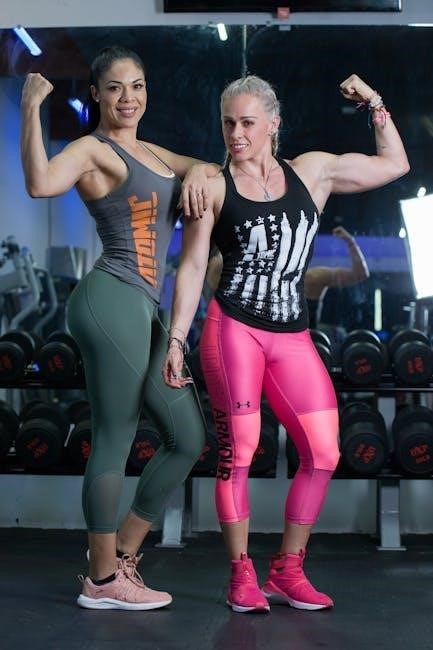
3-Month Beginner Gym Workout Plan
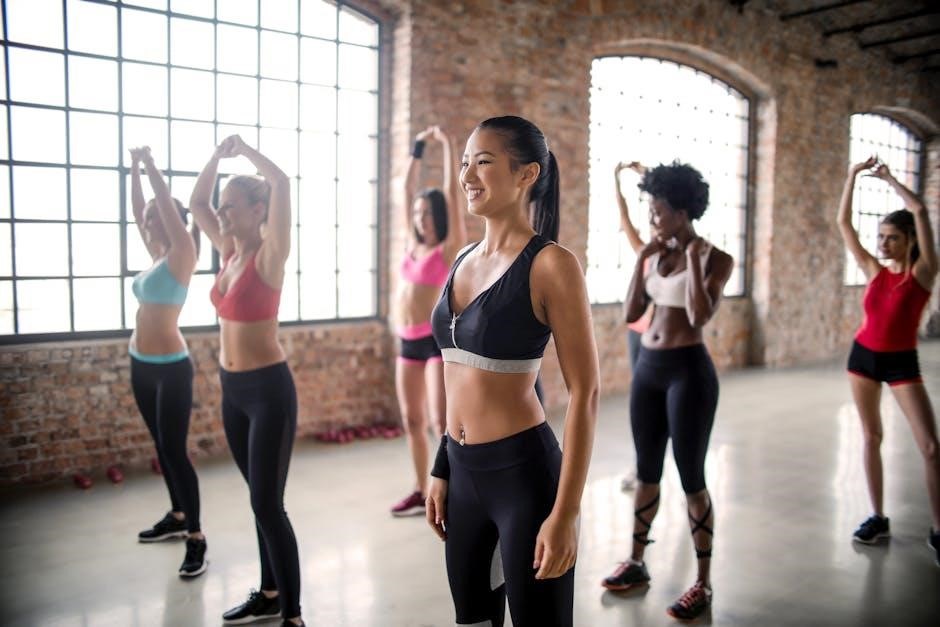
This 12-week plan progressively builds strength and endurance, starting with foundational movements and gradually increasing intensity for optimal, sustainable results.
Month 1: Building a Foundation
The initial month focuses on mastering proper form and technique, prioritizing quality over quantity. This phase establishes a solid base for future progress, minimizing injury risk and maximizing effectiveness. Begin with lighter weights and higher repetitions to build muscular endurance and familiarize yourself with each exercise.
Concentrate on controlled movements, engaging the correct muscle groups throughout each repetition. Don’t be afraid to ask for guidance from a trainer to ensure correct form. This foundational period is crucial for developing neuromuscular connections and building confidence in the gym environment. Consistency is key during this phase!
Focus on Proper Form and Technique
Prioritizing correct form is paramount, even before weight selection. Improper technique can lead to injuries and hinder progress. Begin each exercise slowly, focusing on controlled movements and engaging the targeted muscle groups. Visualize the correct form and utilize mirrors to self-assess.
Don’t hesitate to reduce the weight if maintaining proper form becomes challenging. Seeking guidance from a qualified trainer is highly recommended, especially when learning new exercises. Mastering technique builds a strong foundation, ensuring long-term safety and maximizing the benefits of your workouts. Form over ego – always!
Workout Frequency and Duration
For beginners, aim for 3-4 gym sessions per week, allowing adequate rest for muscle recovery. Each workout should ideally last between 45-60 minutes, including warm-up and cool-down. Consistency is key; sticking to a regular schedule yields better results than sporadic, intense sessions.
As you progress, you can gradually increase the frequency or duration. Listen to your body and don’t push yourself too hard, especially in the initial stages. Remember, rest days are crucial for muscle repair and growth. A balanced approach ensures sustainable progress and prevents burnout.
Month 2: Increasing Intensity
Building upon the foundation of Month 1, this phase focuses on progressive overload. Gradually increase the weight, repetitions, or sets for each exercise. Don’t be afraid to challenge yourself, but maintain proper form to avoid injuries. Small, incremental increases are more effective than drastic jumps.
This month is about pushing your limits safely. Continue to prioritize technique, and consider incorporating slightly more challenging variations of exercises. Remember to listen to your body and adjust the intensity as needed. Consistency and mindful progression are vital for continued gains.
Progressive Overload Principles
Progressive overload is the cornerstone of muscle growth and strength gains. It involves consistently increasing the demands placed on your muscles over time. This can be achieved by lifting heavier weights, performing more repetitions, increasing the number of sets, or reducing rest time between sets.
Avoid plateaus by systematically challenging your body. Track your workouts to monitor progress and ensure you’re consistently overloading. Small, incremental increases are preferable to large jumps, minimizing injury risk. Prioritize maintaining proper form throughout the process; quality over quantity is key to safe and effective progression.

Introducing New Exercises
As you progress, incorporating new exercises is vital to prevent plateaus and stimulate continued muscle growth. Month 2 is the perfect time to expand your repertoire beyond foundational movements. Introduce variations of squats, lunges, or presses to target muscles from different angles.
Focus on mastering the form of each new exercise before adding weight. Consider exercises that address muscle imbalances or weaknesses. Don’t overwhelm yourself – add one or two new movements per week. This keeps workouts engaging and ensures comprehensive development, maximizing your fitness journey’s potential.
Month 3: Refining and Challenging
Month 3 focuses on pushing boundaries and solidifying gains. It’s time to refine technique and introduce advanced techniques like drop sets and supersets to increase intensity and challenge your muscles further. These methods maximize muscle fatigue and promote growth.
Consistent tracking of progress – weight lifted, reps completed – is crucial for making informed adjustments. Analyze your performance and modify the plan accordingly. Remember, listening to your body is paramount. Prioritize proper form over lifting heavier weights, ensuring a safe and effective workout experience.
Advanced Techniques (Drop Sets, Supersets)
Elevate your training with drop sets and supersets! Drop sets involve performing an exercise to failure, then immediately reducing the weight and continuing for more reps – maximizing muscle fiber recruitment. Supersets pair two exercises back-to-back with no rest, targeting opposing muscle groups or the same group from different angles.
These techniques increase workout density and metabolic stress, promoting greater muscle hypertrophy and calorie expenditure. Implement them strategically, perhaps once or twice per week, to avoid overtraining. Remember proper form remains essential even under fatigue.
Tracking Progress and Adjustments

Consistent monitoring is key to sustained success! Keep a workout journal, noting sets, reps, and weight lifted for each exercise. Track body measurements and take progress photos to visualize changes. Regularly assess how you feel – are you recovering adequately?
Don’t be afraid to adjust the plan based on your progress. If an exercise feels too easy, increase the weight or reps. If you’re struggling, reduce the load or modify the movement. Listen to your body and prioritize proper form over lifting heavy weights. Adaptability ensures continued gains!

5-Day Gym Workout Routine for Women
This routine blends strength training and cardio, designed to boost strength, build lean muscle, and improve overall fitness for women of all levels.
Day 1: Lower Body – Quads & Glutes
Focus on building strength and definition in your lower body. Begin with squats, incorporating variations like goblet squats or front squats to target different muscle fibers. Follow with lunges – forward, reverse, or walking – to enhance balance and stability. Step-ups onto a bench are excellent for isolating each leg and improving glute activation.
Remember proper form is crucial to prevent injury. Aim for 3-4 sets of 10-12 repetitions for each exercise. Consider adding resistance bands for an extra challenge as you progress. Don’t forget to engage your core throughout each movement for optimal stability and power!
Squats and Variations
Squats are foundational for lower body strength and overall fitness. Start with bodyweight squats, focusing on maintaining a straight back and controlled descent. Progress to goblet squats, holding a dumbbell or kettlebell close to your chest for added resistance. Front squats, with the weight held in front of your shoulders, further challenge your quads and core.
Experiment with variations like jump squats for explosive power or pause squats to increase time under tension. Aim for 3-4 sets of 10-12 repetitions, prioritizing proper form over lifting heavy weight. Remember to warm up adequately before squatting!
Lunges and Step-Ups
Lunges and step-ups are excellent unilateral exercises, meaning they work one leg at a time, improving balance and addressing muscle imbalances. Begin with forward lunges, ensuring your front knee doesn’t extend past your toes. Add variations like reverse lunges or walking lunges for increased challenge.
Step-ups onto a stable box or bench target the glutes and quads. Focus on driving through your heel and maintaining a controlled movement. Perform 3-4 sets of 10-12 repetitions per leg for both exercises. These movements build functional strength and sculpt your lower body.
Day 2: Upper Body – Chest & Triceps
Focus on sculpting and strengthening your upper body today! Begin with bench press, or dumbbell chest press if you’re a beginner, performing 3-4 sets of 8-12 repetitions. Alternatives include incline dumbbell press to target the upper chest or push-ups for a bodyweight challenge.
Next, isolate your triceps with exercises like tricep extensions (overhead or lying) and tricep pushdowns using a cable machine. Aim for 3 sets of 12-15 repetitions. Proper form is crucial to avoid injury and maximize muscle activation.
Bench Press and Alternatives
The bench press is a cornerstone for chest development, but variations cater to all levels. Start with a barbell bench press, ensuring a spotter for safety. Aim for 3-4 sets of 8-12 repetitions, focusing on controlled movements. If you’re new to this, dumbbell chest press is an excellent alternative, allowing for a greater range of motion and individual muscle engagement.
Incline dumbbell presses target the upper chest, while decline presses focus on the lower portion. Push-ups are a fantastic bodyweight option, easily modified for difficulty. Prioritize proper form to prevent injuries and maximize results.
Tricep Extensions and Pushdowns
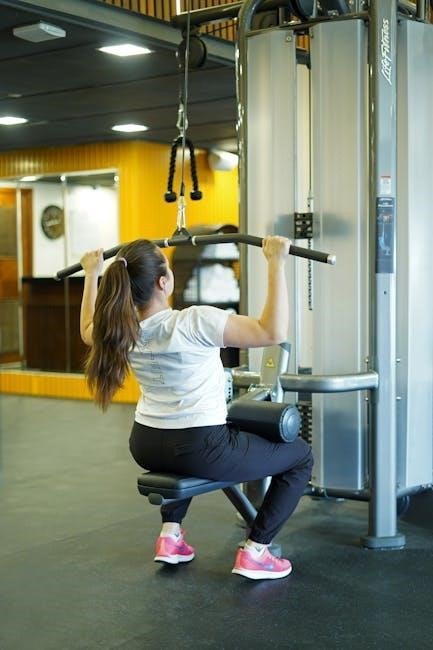
Sculpting defined triceps requires focused exercises. Overhead dumbbell extensions effectively isolate the muscle, performed seated or standing with 3-4 sets of 10-15 reps. Cable pushdowns, using various attachments like rope or straight bars, provide constant tension throughout the movement. Focus on squeezing the triceps at the bottom of each rep.
Close-grip bench presses also target the triceps, offering a compound movement benefit. Dips, utilizing dip bars or a bench, are a challenging bodyweight option. Remember to control the descent and ascent for optimal results and injury prevention.
Day 3: Active Recovery & Cardio
Prioritize recovery with active rest. This isn’t a day off, but a chance to promote blood flow and reduce muscle soreness. Opt for low-impact cardio like brisk walking, cycling, or swimming for 30-45 minutes at a moderate intensity. These activities enhance functional fitness without overstressing the body.
Incorporate dynamic stretching and flexibility exercises, focusing on major muscle groups. Yoga or Pilates are excellent choices. Prioritize movements that improve range of motion and prevent stiffness. Remember hydration and proper nutrition to support recovery and prepare for subsequent workouts.
Low-Impact Cardio Options
Choose activities that minimize stress on joints. Brisk walking is accessible and effective, easily adjusted for intensity; Cycling, whether outdoors or on a stationary bike, provides a great cardiovascular workout. Swimming is exceptionally gentle, working the entire body without impact. Elliptical trainers offer a similar low-stress experience.
Consider rowing machines for a full-body cardio session. Aim for 30-45 minutes at a moderate intensity, maintaining a conversational pace. These options enhance cardiovascular health, improve endurance, and aid in calorie burning, supporting overall fitness goals without risking injury.
Stretching and Flexibility
Prioritize flexibility to improve range of motion and prevent injuries. Static stretches, held for 20-30 seconds, are ideal post-workout, targeting major muscle groups. Dynamic stretching, involving controlled movements, prepares muscles for activity before exercise. Incorporate yoga or Pilates for enhanced flexibility and core strength.
Focus on stretches for hamstrings, quads, calves, chest, and shoulders. Regular stretching improves posture, reduces muscle soreness, and enhances athletic performance. Remember to breathe deeply during each stretch, avoiding bouncing or forcing movements. Consistency is key for noticeable improvements.
Day 4: Lower Body – Hamstrings & Calves
Focus on sculpting the back of your legs and lower legs for balanced development. Begin with Deadlifts (3 sets of 8-12 reps) and Romanian Deadlifts (3 sets of 10-15 reps), maintaining a straight back. These build strength and definition. Follow with Hamstring Curls (3 sets of 12-15 reps) on a machine, isolating the hamstrings.
For calves, perform Standing Calf Raises (4 sets of 15-20 reps) and Seated Calf Raises (3 sets of 15-20 reps) to target both calf muscles. Proper form is crucial to avoid injury. Remember to control the movement and feel the stretch in your hamstrings and calves.
Deadlifts and Romanian Deadlifts
These exercises are foundational for hamstring and glute development, building overall lower body strength. Deadlifts (3 sets of 8-12 reps) require proper form – a straight back, engaged core, and controlled movement. Romanian Deadlifts (3 sets of 10-15 reps) emphasize the hamstring stretch, focusing on the eccentric phase.
Start with lighter weights to master the technique before increasing the load. Maintain a slight bend in your knees throughout both exercises. Prioritize form over weight to prevent injuries and maximize muscle activation. These lifts contribute significantly to functional strength and a toned physique.
Calf Raises and Hamstring Curls
Sculpting defined calves and strong hamstrings is crucial for balanced leg development. Perform Calf Raises (3 sets of 15-20 reps), focusing on a full range of motion – squeezing at the top and lowering slowly. Hamstring Curls (3 sets of 12-15 reps) can be done on a machine or with resistance bands, isolating the hamstring muscles.
Control the movement throughout both exercises, avoiding momentum. Vary your foot position during calf raises to target different calf muscles. Consistent effort will lead to noticeable improvements in leg strength and definition, enhancing athletic performance and overall lower body aesthetics.
Day 5: Upper Body – Back & Biceps
Focus on building a strong and sculpted back and biceps for improved posture and upper body strength. Begin with Pull-Ups (3 sets, as many reps as possible – assisted if needed) or Lat Pulldowns (3 sets of 10-12 reps). Follow with Rows (3 sets of 12-15 reps), utilizing dumbbells or a cable machine to target different back muscles.
Finish with Bicep Curls (3 sets of 10-12 reps) and Hammer Curls (3 sets of 12-15 reps) to isolate the biceps. Maintain proper form throughout each exercise, controlling the weight and focusing on muscle contraction for optimal results.
Pull-Ups (Assisted if needed) & Rows
Pull-Ups are a challenging yet rewarding exercise for back development. If unable to perform unassisted pull-ups, utilize an assisted pull-up machine or resistance bands to reduce the load. Aim for 3 sets of as many repetitions as possible (AMRAP), focusing on controlled movements. Alternatively, Lat Pulldowns effectively mimic the pull-up motion.
Follow with Rows – either dumbbell rows, barbell rows, or cable rows – performing 3 sets of 10-12 repetitions. Rows target various back muscles, contributing to overall back strength and definition. Prioritize proper form to prevent injury.
Bicep Curls and Hammer Curls
Isolate and strengthen your biceps with classic Bicep Curls. Utilize dumbbells, performing 3 sets of 10-12 repetitions. Focus on controlled contractions and avoid swinging your body for momentum. Next, incorporate Hammer Curls, holding the dumbbells with a neutral grip (palms facing each other).
Hammer Curls engage the brachialis and brachioradialis muscles alongside the biceps, contributing to greater arm development. Perform 3 sets of 10-12 repetitions. Varying your grip and curl type ensures comprehensive bicep muscle activation and balanced growth.
Workout Plan Variations
Explore diverse training splits like PPL (Push, Pull, Legs), full-body routines, or upper/lower splits to optimize progress and prevent plateaus effectively.

PPL (Push, Pull, Legs) Split
The PPL split organizes workouts by movement patterns, dedicating sessions to pushing exercises (chest, shoulders, triceps), pulling exercises (back, biceps), and leg exercises (quads, hamstrings, calves). This allows for focused muscle group targeting and sufficient recovery time between sessions.
A typical PPL routine involves training each muscle group once or twice per week, depending on experience level and recovery capacity. For example, a beginner might perform a PPL cycle three times a week, while more advanced lifters could increase frequency. This split is excellent for building muscle and strength, offering a structured approach to gym workouts. Remember to prioritize proper form and progressive overload for optimal results.
Full Body Workouts
Full body workouts involve training all major muscle groups in each session, making them incredibly efficient for those with limited time. This approach stimulates a greater metabolic response and can be particularly effective for beginners or individuals returning to exercise.
Typically, these workouts include compound exercises like squats, deadlifts, bench presses, and rows, alongside accessory movements. Performing full body workouts 2-3 times per week, with rest days in between, allows for adequate recovery. They’re fantastic for building overall strength, improving cardiovascular health, and promoting fat loss. Prioritize proper form to prevent injuries and maximize benefits;
Upper/Lower Body Split
An upper/lower body split divides workouts into days focusing on either the upper body (chest, back, shoulders, arms) or the lower body (legs and glutes). This allows for more focused attention on specific muscle groups and potentially greater training volume.
A common schedule involves two upper body days and two lower body days per week, with rest days strategically placed. This split is suitable for intermediate to advanced lifters seeking to build muscle and strength. It allows for sufficient recovery between sessions targeting the same muscle groups, promoting optimal growth and performance. Remember progressive overload is key!

Important Considerations
Prioritize warm-up routines, proper nutrition, and adequate cool-downs for optimal results and injury prevention throughout your fitness journey.
Warm-up and Cool-down Routines
Dynamic stretching is crucial before each workout, preparing muscles for activity and increasing range of motion. Include arm circles, leg swings, and torso twists for 5-10 minutes. A proper warm-up minimizes injury risk and enhances performance.
Following your workout, dedicate 5-10 minutes to static stretching, holding each stretch for 20-30 seconds. Focus on major muscle groups worked during the session. Cool-downs aid recovery, reduce muscle soreness, and improve flexibility.
Don’t underestimate the power of these routines; they are integral to a well-rounded fitness plan, supporting both physical performance and long-term health.
Nutrition for Optimal Results
Fueling your body correctly is as important as the workouts themselves. Prioritize a balanced diet rich in protein, complex carbohydrates, and healthy fats. Protein supports muscle repair and growth, while carbohydrates provide energy for intense training sessions.
Hydration is key; drink plenty of water throughout the day, especially before, during, and after workouts. Consider incorporating nutrient-dense foods like fruits, vegetables, and whole grains into your meals.
Remember, nutrition isn’t about restriction, but about providing your body with the building blocks it needs to thrive and achieve your fitness goals.
Comments