Elegoo Super Starter Kit PDF: A Comprehensive Guide
This guide comprehensively explores the Elegoo Super Starter Kit, focusing on its readily available PDF tutorial. It’s designed for beginners eager to delve into Arduino programming, offering over 22 lessons and detailed instructions for a smooth learning experience.
The Elegoo Super Starter Kit serves as an excellent entry point into the world of microcontrollers and physical computing, particularly for those new to the Arduino platform. This kit is specifically designed to be beginner-friendly, offering a comprehensive package that includes all the necessary components to start experimenting with electronics and programming. A key feature of this kit is the availability of a detailed PDF tutorial, boasting over 22 lessons, which guides users through the fundamentals of Arduino programming and electronics.
The kit’s compatibility with the Arduino IDE makes it easy to write, upload, and test code. It’s an economical choice, providing a robust foundation for learning and project development. The included tutorial isn’t just a set of instructions; it’s a structured learning path, introducing concepts like sensor principles and basic software configuration. Whether you’re a student, hobbyist, or simply curious, the Elegoo Super Starter Kit provides a fantastic opportunity to learn and create.
What’s Included in the Kit? ― Component Overview
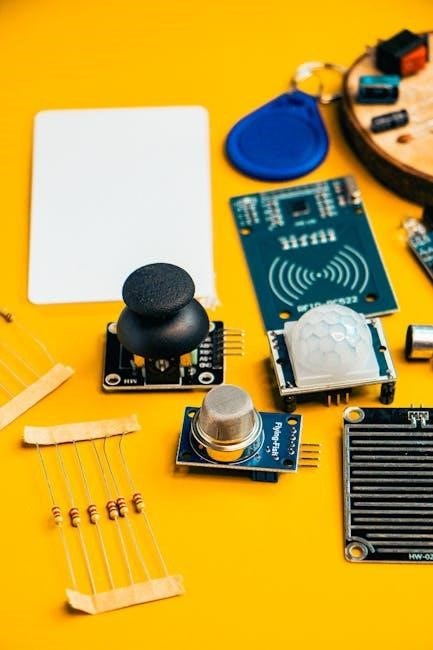
The Elegoo Super Starter Kit is packed with components designed for a diverse range of projects, all detailed within the accompanying PDF tutorial. Core to the kit is the UNO R3 board, the brains of the operation, alongside an LCD1602 module for displaying information. A power supply module ensures stable operation, complemented by a 9V battery connector for alternative power.
Beyond these essentials, the kit includes a variety of sensors and electronic components, such as LEDs, resistors, and jumper wires, enabling a multitude of experiments. The PDF tutorial provides a clear overview of each component, explaining its function and how to connect it to the UNO R3 board. Notably, the LCD1602 module often comes with a pre-soldered pin header, simplifying setup for beginners. This comprehensive component list, coupled with the detailed guide, makes the kit exceptionally valuable.
Downloading the Elegoo Super Starter Kit PDF Tutorial

Accessing the Elegoo Super Starter Kit PDF tutorial is straightforward, ensuring a quick start to your Arduino journey. ELEGOO US provides a free PDF tutorial containing over 22 lessons, readily available for download. Several sources host the tutorial; the official ELEGOO website is a primary location, offering the most up-to-date version.
Alternatively, download links can be found on platforms like Amazon product pages for the kit, and through direct links shared on the ELEGOO official resources. Google Drive also hosts copies for convenient access. The tutorial covers everything from Arduino IDE setup to sensor principles and programming fundamentals. Ensure you download the correct version corresponding to your kit – specifically, look for resources mentioning the “Super Starter Kit” to guarantee compatibility and a seamless learning experience.
Understanding the Arduino IDE Compatibility

The Elegoo Super Starter Kit is specifically designed for seamless compatibility with the Arduino IDE, the standard software for Arduino programming. The included PDF tutorial dedicates significant attention to the initial Arduino IDE setup and configuration, guiding beginners through the installation process and essential settings.
This ensures users can immediately begin uploading code and interacting with the kit’s components. The tutorial emphasizes the fundamental principles of the IDE, making it accessible even for those with no prior programming experience. The kit’s components are pre-configured to work optimally within the Arduino environment, minimizing potential compatibility issues. Furthermore, the Elegoo resources and the broader Arduino community offer extensive support for troubleshooting any IDE-related challenges, ensuring a smooth and productive learning experience.

Kit Components and Their Functions
The Elegoo Super Starter Kit boasts a variety of components, including an UNO R3 board, LCD1602 module, and a power supply module, all detailed within the PDF.
The UNO R3 Board ― Core of the System
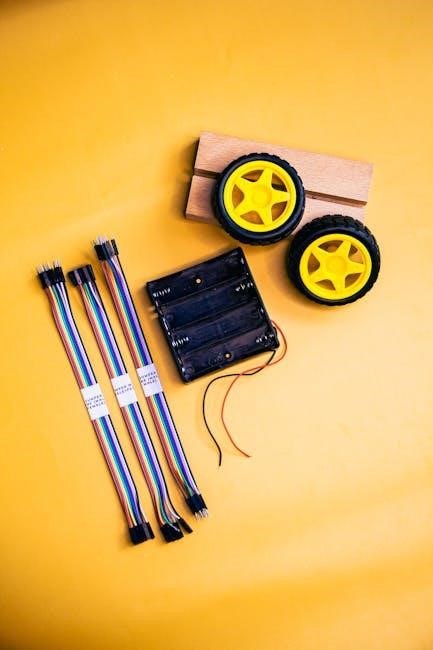
The UNO R3 board serves as the central processing unit within the Elegoo Super Starter Kit, and its functionality is thoroughly explained in the accompanying PDF tutorial. This microcontroller board, compatible with the Arduino IDE, is based on the ATmega328P chip. The PDF details its various pins – digital and analog – crucial for connecting sensors and components.
Understanding the UNO R3’s architecture is fundamental to successful project implementation. The PDF guides users through its power input, USB connectivity for programming, and the reset button for restarting operations. It also clarifies the role of the voltage regulator, ensuring stable power delivery to connected devices. The tutorial emphasizes how to upload sketches (programs) to the board using the Arduino IDE, effectively bringing your electronic creations to life. The Elegoo kit provides a high-quality UNO R3, making it an excellent starting point for beginners;
LCD1602 Module — Displaying Information
The LCD1602 module, a key component of the Elegoo Super Starter Kit, allows for clear visual output of data, and the PDF tutorial provides comprehensive guidance on its use. This module, capable of displaying across two lines, is invaluable for debugging and monitoring project status. The PDF details the pin connections required to interface the LCD1602 with the UNO R3 board, including power, ground, and data lines.
The tutorial explains how to program the Arduino to display text and variables on the LCD screen. It covers essential concepts like initializing the LCD, setting the cursor position, and sending commands. Importantly, the Elegoo kit includes an LCD1602 module with pre-soldered pin headers, simplifying the setup process for beginners. The PDF offers example code snippets, enabling users to quickly grasp the fundamentals of LCD control and enhance their projects with informative displays.
Power Supply Module ― Providing Stable Power
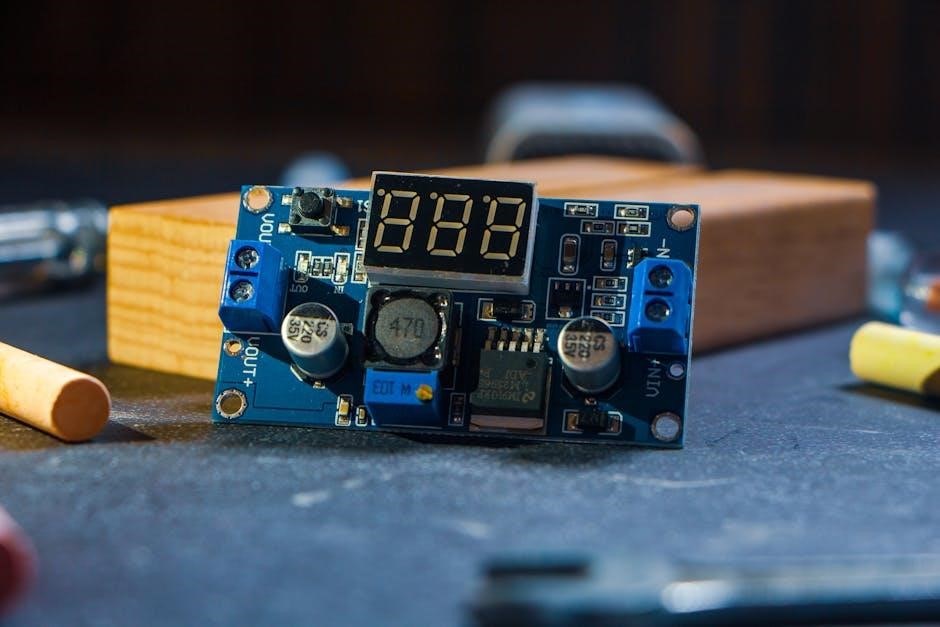
The Power Supply Module included in the Elegoo Super Starter Kit is crucial for delivering consistent and reliable power to your projects. The accompanying PDF tutorial emphasizes its importance, detailing how to connect it to the UNO R3 board and external power sources. This module offers a regulated 5V output, protecting sensitive components from voltage fluctuations, a common issue with unregulated power supplies.
The PDF guides users through understanding the module’s input voltage range and current limitations. It explains how to avoid overloading the power supply, which could damage the board or connected components. Furthermore, the tutorial demonstrates how to use the module in conjunction with a 9V battery connector (also included in the kit) for portable projects. The Elegoo documentation stresses the importance of proper wiring and polarity to ensure safe and efficient operation, making it beginner-friendly.
9V Battery Connector — Alternative Power Source
The 9V Battery Connector, a key component of the Elegoo Super Starter Kit, provides a convenient alternative to USB power for your Arduino projects. The PDF tutorial clearly illustrates how to connect this connector to the power supply module, enabling portable operation without relying on a constant USB connection. This is particularly useful for projects intended for remote locations or demonstrations.
The Elegoo documentation within the PDF stresses the importance of using a fresh 9V battery for optimal performance. It also details the expected runtime based on the project’s power consumption. The tutorial guides users on proper battery polarity and secure connection techniques to prevent interruptions. While offering portability, the PDF also notes that battery life is limited and USB power is recommended for extended use, ensuring a comprehensive understanding of power options.
The 10-Lesson Tutorial: A Step-by-Step Approach
The Elegoo Super Starter Kit PDF features a 10-lesson tutorial, guiding beginners through Arduino IDE setup, sensor principles, and basic programming fundamentals for the UNO board.
Lesson 1: Arduino IDE Setup and Configuration
This initial lesson, detailed within the Elegoo Super Starter Kit PDF tutorial, focuses on establishing your development environment. It begins with downloading the correct Arduino IDE version, ensuring compatibility with the UNO R3 board included in the kit. The guide provides step-by-step instructions for installation across various operating systems – Windows, macOS, and Linux – addressing potential issues during the process.
Crucially, the tutorial covers configuring the Arduino IDE to recognize the Elegoo UNO R3 board. This involves selecting the correct board type and port within the IDE settings. The PDF emphasizes the importance of installing necessary drivers for proper communication between your computer and the board. Furthermore, it explains how to verify the installation by uploading a simple “Blink” sketch, confirming successful connection and functionality. Troubleshooting tips are included for common setup problems, making this lesson accessible even for absolute beginners.
Lesson two, as outlined in the Elegoo Super Starter Kit PDF tutorial, provides a foundational understanding of essential electronic components. It begins with a detailed examination of resistors – their function, color code interpretation, and role in current limiting. Capacitors are then introduced, explaining their ability to store electrical energy and their various types.
The PDF further explores diodes, detailing their unidirectional current flow characteristics, and LEDs, demonstrating how they emit light when current passes through them. A significant portion of the lesson is dedicated to breadboards, explaining their purpose as a solderless prototyping tool and demonstrating proper component placement. The tutorial emphasizes safety precautions when working with these components, and includes practical exercises to reinforce learning, preparing users for more complex circuit building in subsequent lessons. Understanding these basics is crucial for success with the kit.
Lesson 3: Understanding Sensors and Their Principles
Lesson three of the Elegoo Super Starter Kit PDF tutorial dives into the world of sensors, explaining their function as input devices that detect changes in the physical environment. The tutorial focuses on several key sensors included in the kit, beginning with the temperature and humidity sensor (DHT11), detailing how it measures atmospheric conditions.
Light Dependent Resistors (LDRs) are then explored, explaining their resistance changes based on light intensity. The PDF also covers ultrasonic sensors, demonstrating their use in distance measurement through sound waves. Each sensor’s operating principle is explained with clear diagrams and practical examples. The lesson emphasizes how to connect these sensors to the Arduino UNO board and interpret the data received, laying the groundwork for building interactive projects. Understanding sensor data is key to creating responsive systems.
Lesson 4: Programming the UNO Board ― Fundamentals
Lesson four, detailed within the Elegoo Super Starter Kit PDF tutorial, introduces the fundamentals of programming the Arduino UNO board. It begins with the basic structure of an Arduino sketch, explaining the setup and loop functions. The tutorial guides users through writing simple code to control LEDs, demonstrating concepts like digital input and output.
Variables, data types, and basic operators are explained with practical examples. The PDF also covers conditional statements (if, else) and loops (for, while), enabling users to create more complex programs. Emphasis is placed on understanding the Arduino IDE, including uploading code and interpreting error messages. This lesson provides a solid foundation for future programming endeavors, empowering beginners to bring their ideas to life through code.
Project Ideas and Applications
The Elegoo Super Starter Kit PDF unlocks a world of projects, from simple LED control to sophisticated sensor-based systems, fostering practical Arduino skills.
Project 1: LED Control and Blinking
This foundational project, detailed within the Elegoo Super Starter Kit PDF tutorial, introduces the core concept of controlling external components with the Arduino UNO R3 board. Users learn to connect an LED to the board and write simple code to make it blink. This seemingly basic exercise is crucial for understanding digital output and the fundamental principles of programming the Arduino IDE.
The PDF provides a step-by-step guide, including a circuit diagram illustrating the correct wiring configuration. It explains the necessary code, breaking down each line to ensure beginners grasp the logic behind turning the LED on and off. Variations are often suggested, such as altering the blink rate, to encourage experimentation and deeper understanding. Successfully completing this project builds confidence and provides a solid base for tackling more complex applications outlined in the kit’s comprehensive documentation.
Furthermore, the tutorial emphasizes the importance of resistor selection to protect the LED from damage, a vital lesson in electronics safety.
Project 2: Temperature and Humidity Sensing
Building upon the basics, the Elegoo Super Starter Kit PDF tutorial guides users through interfacing a temperature and humidity sensor (typically a DHT11 or DHT22) with the Arduino UNO. This project demonstrates how to read analog data and convert it into meaningful environmental readings. The PDF provides detailed wiring diagrams and explains the sensor’s operating principles.
The tutorial includes code examples that demonstrate how to acquire data from the sensor, process it, and display it – often utilizing the LCD1602 module included in the kit. Users learn about data calibration and potential sources of error. The PDF emphasizes the importance of understanding sensor specifications and limitations.
This project is a practical application of sensor technology, showcasing how Arduino can be used for environmental monitoring and data logging, fostering a deeper understanding of real-world applications.
Project 3: LCD Displaying Sensor Data
Expanding on previous projects, the Elegoo Super Starter Kit PDF tutorial demonstrates how to display sensor data – such as temperature and humidity from Project 2 – on the included LCD1602 module. This project focuses on mastering the communication between the Arduino UNO and the LCD, utilizing specific libraries and functions.
The PDF provides clear instructions on initializing the LCD, defining custom characters, and formatting the data for clear presentation. Users learn to control the LCD’s cursor position and display dynamic information. Code examples illustrate how to integrate sensor readings directly into the LCD output, creating a functional data display system.
This project reinforces understanding of both hardware interfacing and software programming, showcasing how to build a user-friendly interface for monitoring sensor data, a crucial skill in many Arduino applications.
Project 4: Building a Simple Alarm System
The Elegoo Super Starter Kit PDF tutorial culminates in building a simple alarm system, integrating components from previous lessons. This project utilizes a buzzer or speaker, connected to the Arduino UNO, and triggered by a sensor – often a light sensor or button – demonstrating a practical application of learned skills.
The PDF guides users through writing code to monitor the sensor’s state and activate the alarm when a predefined condition is met. It covers concepts like conditional statements (if/else) and digital output control. Users learn to customize the alarm’s duration and sound pattern.
This project solidifies understanding of input/output operations, logical programming, and system integration, providing a foundation for more complex security or automation projects. It’s a rewarding final step in the tutorial series.
Troubleshooting Common Issues
The Elegoo Super Starter Kit PDF offers solutions for frequent problems, including Arduino IDE errors, component failures, and power supply issues, ensuring a smoother project journey.
Common Errors and Solutions in the Arduino IDE
Navigating the Arduino IDE can present challenges, especially for beginners utilizing the Elegoo Super Starter Kit. The accompanying PDF tutorial frequently addresses common errors. A prevalent issue is the “board not found” error; ensure the correct board (Arduino Uno) is selected under the “Tools” menu. Another frequent problem involves library inclusion – verify that necessary libraries are installed via the Library Manager and correctly included in your sketch using the #include directive.
Compilation errors, often stemming from syntax mistakes, are easily rectified by carefully reviewing the code against the examples provided in the Elegoo PDF. Serial monitor issues, such as no output, can be resolved by confirming the correct port is selected and the baud rate matches the code. The tutorial emphasizes methodical debugging, encouraging users to break down code into smaller segments to isolate errors. Remember to always double-check wiring connections as incorrect connections can lead to unexpected behavior and errors within the IDE.
Component Failure and Replacement
Component failure is an inevitable part of electronics experimentation, even with a quality kit like the Elegoo Super Starter Kit. The PDF tutorial doesn’t explicitly detail every failure scenario, but emphasizes careful handling to minimize risks. LEDs are prone to burnout if overcurrent is applied; resistors help prevent this. If an LED fails, replacement is straightforward – ensure correct polarity during installation.
Sensors, like those included, can malfunction due to static discharge or physical damage. If a sensor provides erratic readings, try replacing it. The Elegoo kit provides spares of some components. For the UNO R3 board, failure is less common but possible; contact Elegoo support if issues persist. Always disconnect power before replacing any component. The PDF guides users to identify faulty components through testing and comparison with working examples, promoting a practical understanding of troubleshooting.
Power Supply Problems and Fixes
Power supply issues are common when starting with the Elegoo Super Starter Kit. The PDF tutorial highlights the importance of a stable 5V power source. Problems often stem from incorrect USB cable connections or a faulty USB port. Ensure the cable is securely connected to both the UNO R3 board and your computer. The included power supply module and 9V battery connector offer alternatives if USB power is unreliable.
If using the 9V battery, check battery polarity and ensure it’s adequately charged. A weak battery can cause erratic behavior. The PDF emphasizes avoiding simultaneous use of USB and the 9V battery, as this can damage the board. If the board isn’t receiving power, verify the voltage regulator is functioning correctly. Troubleshooting steps in the Elegoo documentation guide users through checking connections and voltage levels.
Resources and Further Learning
Explore the Elegoo official website for support and the vibrant Arduino forum for community assistance. Numerous online tutorials expand upon the PDF’s lessons.
Elegoo Official Website and Support
Elegoo’s official website serves as a central hub for all things related to the Super Starter Kit and its accompanying PDF tutorial. You’ll find frequently asked questions (FAQs) addressing common issues encountered during setup and project implementation. Directly accessing the PDF tutorial is often available for re-download, ensuring you always have the latest version at your fingertips.
Beyond the PDF, Elegoo provides a dedicated support team reachable through their website, offering assistance with technical difficulties or clarifying any ambiguities within the tutorial. The site also features a blog with additional project ideas, advanced techniques, and updates related to the Arduino platform. Elegoo consistently updates its resources, ensuring users have access to the most current information and support materials. Checking their website is a crucial first step when troubleshooting or seeking inspiration beyond the initial Super Starter Kit experience.
Arduino Forum and Community Support
The Arduino Forum represents a vibrant and invaluable resource for users of the Elegoo Super Starter Kit and its PDF tutorial. This online community is brimming with experienced hobbyists and professionals eager to share their knowledge and assist newcomers. Users frequently discuss challenges encountered while working through the PDF lessons, offering solutions and alternative approaches.
Searching the forum archives often reveals answers to previously asked questions regarding the kit’s components or programming concepts. Beyond troubleshooting, the forum fosters a collaborative environment where users showcase their projects built using the Elegoo kit, providing inspiration and learning opportunities. Don’t hesitate to post your own questions or contribute to existing discussions – the Arduino community is known for its helpfulness and welcoming atmosphere, supplementing the official PDF documentation.
Additional Project Ideas and Tutorials Online
Beyond the Elegoo Super Starter Kit’s PDF tutorial, a wealth of supplementary project ideas and learning resources are readily available online. Websites like Instructables and Hackster.io host numerous Arduino-based projects, many of which are compatible with the components included in the kit. These platforms often provide detailed step-by-step instructions, code examples, and even video tutorials.
YouTube is another excellent source, featuring countless channels dedicated to Arduino programming and electronics. Searching for “Elegoo projects” or “Arduino tutorials” will yield a diverse range of content, expanding upon the concepts introduced in the PDF. Exploring these external resources allows users to deepen their understanding and tackle more complex projects, fostering creativity and innovation beyond the scope of the starter kit’s initial lessons.
Comments